



Pet and Animal Licensing Requirements in Wales
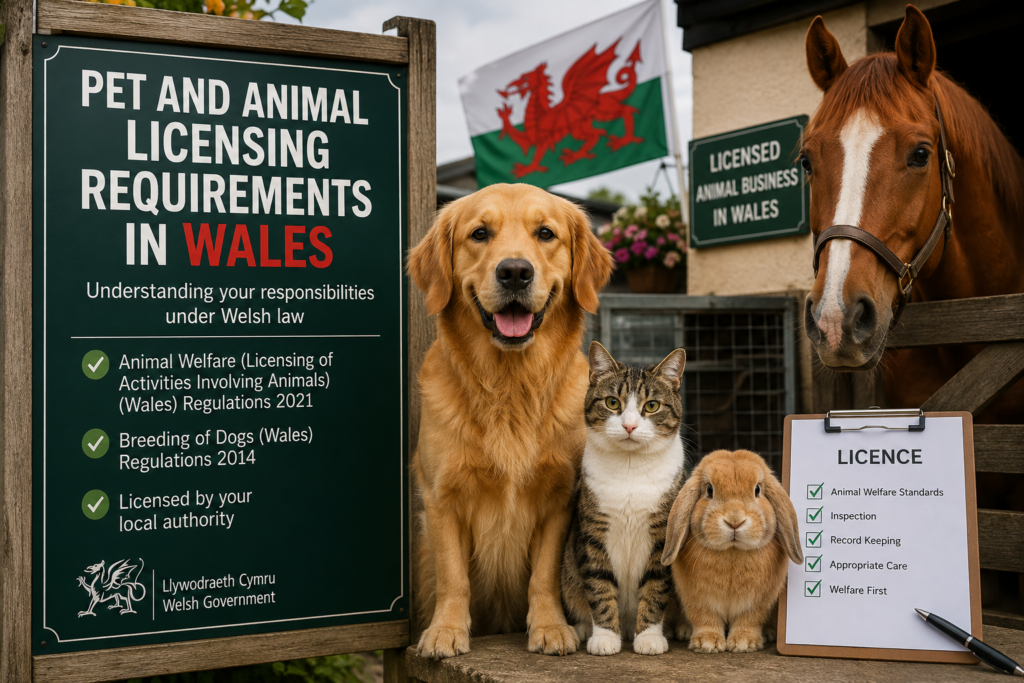
If you operate a business involving animals in Wales, you may be legally required to hold a licence issued by your local authority. Welsh animal licensing laws are designed to protect animal welfare while ensuring businesses meet consistent standards of care.
Whether you are planning to sell pets, breed dogs, provide boarding services or run a riding establishment, understanding your legal responsibilities is essential before trading.
Animal Licensing in Wales
Animal licensing in Wales is primarily governed by the Animal Welfare (Licensing of Activities Involving Animals) (Wales) Regulations 2021, which came into force on 10 September 2021. The regulations introduced a modern licensing system for commercial activities involving animals and replaced outdated legislation covering pet shops and pet sales.
Licences are issued and enforced by the local authority where the business operates.
Which Businesses Need a Licence?
If you carry out any of the following activities as a business or with the intention of making a profit, you may require a licence from your local council.
Selling Animals as Pets
A licence is required for businesses that sell animals as pets, including:
- Pet shops
- Online pet retailers
- Businesses importing and selling pets
- Commercial pet dealers
The regulations apply where a person:
- Sells animals with the intention of making a profit, or
- Receives commission or fees from the sale of animals.
Businesses must comply with strict welfare standards covering accommodation, feeding, health care, transport, staffing, record keeping and customer information.
Dog Breeding in Wales
Dog breeding is regulated separately under the Animal Welfare (Breeding of Dogs) (Wales) Regulations 2014.
Commercial dog breeders must obtain a licence from their local authority and comply with welfare standards covering:
- Breeding practices
- Housing
- Veterinary care
- Socialisation
- Record keeping
- Staff competence
Licensed breeders are regularly inspected to ensure these standards continue to be met.
Dog Boarding, Kennels and Catteries
Businesses offering accommodation for other people’s pets generally require a licence.
This includes:
- Boarding kennels
- Catteries
- Home boarding for dogs
- Doggy day care businesses
Licensed premises must demonstrate they provide:
- Safe and secure accommodation
- Appropriate exercise
- Clean facilities
- Disease prevention measures
- Emergency procedures
- Suitable staffing levels
Riding Establishments
Anyone operating a riding school or hiring out horses for riding must obtain a licence from their local authority.
Inspectors assess:
- Horse welfare
- Stable management
- Safety procedures
- Veterinary arrangements
- Staff competence
Animal Welfare Standards
All licensed businesses in Wales are expected to meet the welfare requirements set out under the Animal Welfare Act 2006.
These include providing every animal with:
- A suitable environment
- A suitable diet
- The opportunity to display normal behaviour
- Appropriate housing with or away from other animals
- Protection from pain, suffering, injury and disease
These are commonly known as the Five Welfare Needs.
Local Authority Inspections
Before granting a licence, the local authority will normally inspect the premises.
Inspectors may examine:
- Animal accommodation
- Hygiene standards
- Feeding arrangements
- Health records
- Staff training
- Emergency planning
- Veterinary arrangements
- General animal welfare
Further inspections may take place during the licence period.
Operating Without a Licence
Operating a licensable animal business without the required licence is a criminal offence.
Local authorities have enforcement powers that may include:
- Refusing or revoking licences
- Improvement notices
- Prosecution
- Financial penalties
- Disqualification from keeping or working with animals in serious cases
Applying for a Licence
Applications should be made to the environmental health or licensing department of your local council.
The process usually involves:
- Completing an application form.
- Paying the relevant licence fee.
- Inspection of the business premises.
- Demonstrating compliance with Welsh animal welfare standards.
- Receiving your licence if all requirements are met.
Licence fees and renewal periods vary between local authorities.
Before You Start an Animal Business
Before opening an animal-related business in Wales, you should:
- Check whether your activity requires a licence.
- Contact your local authority for guidance.
- Ensure your premises meet all welfare requirements.
- Arrange appropriate business insurance.
- Develop written animal welfare and emergency procedures.
- Keep accurate records of animals in your care.
Final Thoughts
Wales has one of the UK’s most comprehensive animal licensing systems, placing animal welfare at the centre of commercial activities involving pets. Whether you are selling animals, breeding dogs or providing boarding services, obtaining the correct licence is both a legal requirement and an important demonstration of your commitment to responsible animal care.
If you are unsure whether your business requires a licence, contact your local authority before trading. Doing so can help you avoid enforcement action while ensuring your business starts on the right footing.
This article is intended as general information and should not be considered legal advice. Licensing requirements may change, and individual circumstances can vary. Always check with your local Welsh authority before starting a business involving animals.

Comments