



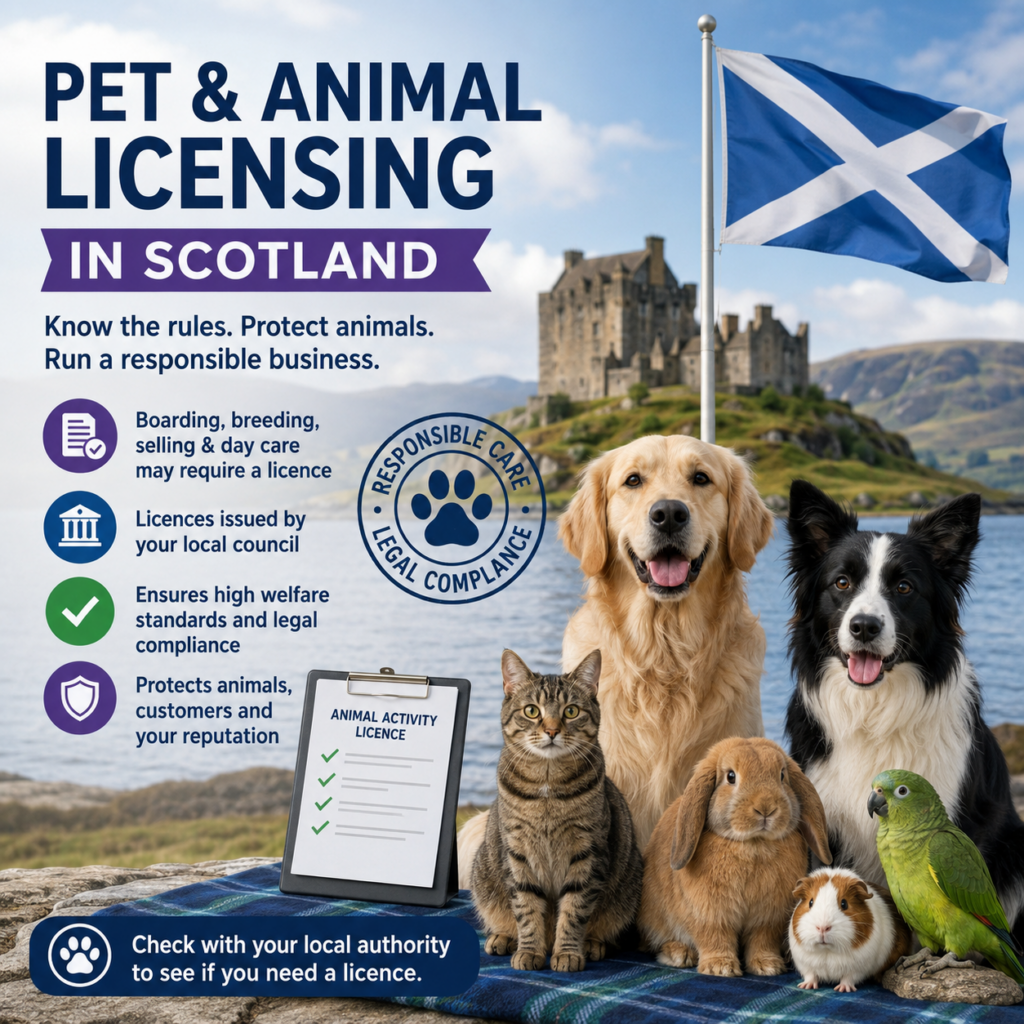
Keeping or working with animals in Scotland can require a licence, depending on the type of business or activity involved. Scottish animal welfare legislation is designed to protect animals and ensure they are cared for in safe, suitable environments.
If you’re planning to start a pet or animal-related business, it’s important to understand whether you need a licence before you begin trading.
Who Issues Animal Licences?
In Scotland, most animal activity licences are issued by your local council under The Animal Welfare (Licensing of Activities Involving Animals) (Scotland) Regulations 2021.
Each local authority is responsible for processing applications, carrying out inspections, and determining whether a licence should be granted.
Activities That May Require a Licence
Boarding Dogs
Anyone providing accommodation for dogs away from their owner’s home, including kennels and home boarding, generally requires a licence.
Licensed businesses must demonstrate:
- Suitable accommodation
- Safe exercise areas
- High standards of hygiene
- Appropriate emergency procedures
- Records for every dog in their care
Boarding Cats
Businesses offering cattery accommodation or boarding cats in domestic premises also require a licence.
Requirements include:
- Secure housing
- Adequate ventilation
- Clean sleeping areas
- Disease prevention measures
- Individual accommodation where appropriate
Dog Day Care
Dog day care businesses, where dogs are looked after during the day without overnight accommodation, require a licence.
Operators must provide:
- Safe supervision
- Appropriate staffing levels
- Suitable exercise and rest areas
- Behaviour management procedures
- Emergency arrangements
Selling Animals as Pets
Businesses selling animals as pets, whether from a shop or another commercial setting, usually require a licence.
This includes many retailers selling:
- Fish
- Birds
- Reptiles
- Small mammals
- Exotic pets
Licence holders must ensure animals are healthy, appropriately housed, and sold responsibly.
Breeding Dogs
Commercial dog breeders require a licence if they meet the licensing threshold set by Scottish legislation.
Licensing helps ensure:
- High welfare standards
- Responsible breeding practices
- Appropriate veterinary care
- Suitable accommodation for breeding dogs and puppies
- Proper record keeping
Activities That May Require Additional Permissions
Depending on the type of animals involved, additional licences or registrations may also be required.
These can include:
- Riding establishments
- Zoos
- Dangerous wild animals
- Wildlife rehabilitation
- Animal transport
- Performing animals (where applicable)
Different legislation applies to these activities.
Inspection Process
Before issuing a licence, the local authority will normally inspect the premises.
Inspectors will assess areas including:
- Animal welfare
- Cleanliness
- Safety
- Staff knowledge and competence
- Record keeping
- Biosecurity
- Fire safety
- Emergency procedures
In some cases, a veterinary surgeon may also be involved in the inspection.
Licence Duration
Animal activity licences in Scotland can be issued for varying periods depending on the outcome of the inspection and the level of compliance demonstrated by the business.
Businesses maintaining consistently high welfare standards may be eligible for longer licence periods.
Conditions of a Licence
Licence holders must continue to meet the conditions attached to their licence throughout its duration.
Failure to comply can result in:
- Improvement notices
- Suspension of the licence
- Revocation of the licence
- Prosecution in serious cases
Do Pet Sitters and Dog Walkers Need a Licence?
At present, professional dog walking and pet sitting businesses operating in owners’ homes generally do not require an animal activity licence under Scottish licensing regulations.
However, businesses should still:
- Hold appropriate public liability insurance.
- Follow recognised animal welfare standards.
- Obtain permission from owners before seeking veterinary treatment.
- Keep accurate records of bookings and emergency contacts.
- Comply with any local council guidance where applicable.
Before Starting an Animal Business
If you’re considering starting a pet or animal-related business in Scotland, you should:
- Contact your local authority before trading.
- Confirm whether your planned activity requires a licence.
- Ensure your premises meet the required welfare standards.
- Arrange appropriate business insurance.
- Keep up to date with any changes in Scottish animal welfare legislation.
Final Thoughts
Scotland has some of the UK’s most comprehensive animal welfare regulations, helping to ensure animals receive proper care while supporting responsible businesses.
Whether you’re opening a boarding kennel, operating a cattery, running dog day care, or selling pets commercially, understanding your licensing responsibilities is an essential first step. If you’re unsure whether your business requires a licence, your local council can provide guidance based on your specific circumstances.
This article is intended as general information and should not be considered legal advice. Licensing requirements may change, and individual circumstances can vary. Always check with your local Scottish authority before starting a business involving animals.

Comments